Meet Planful’s Analyst Assistant — your trusted AI-powered partner for finance, always ready for you.
Learn morePlanner applies AI to your financial data to predict what’s ahead and surface unexpected changes as they happen. Your team gets early visibility into risks and opportunities, with the context needed to respond quickly.
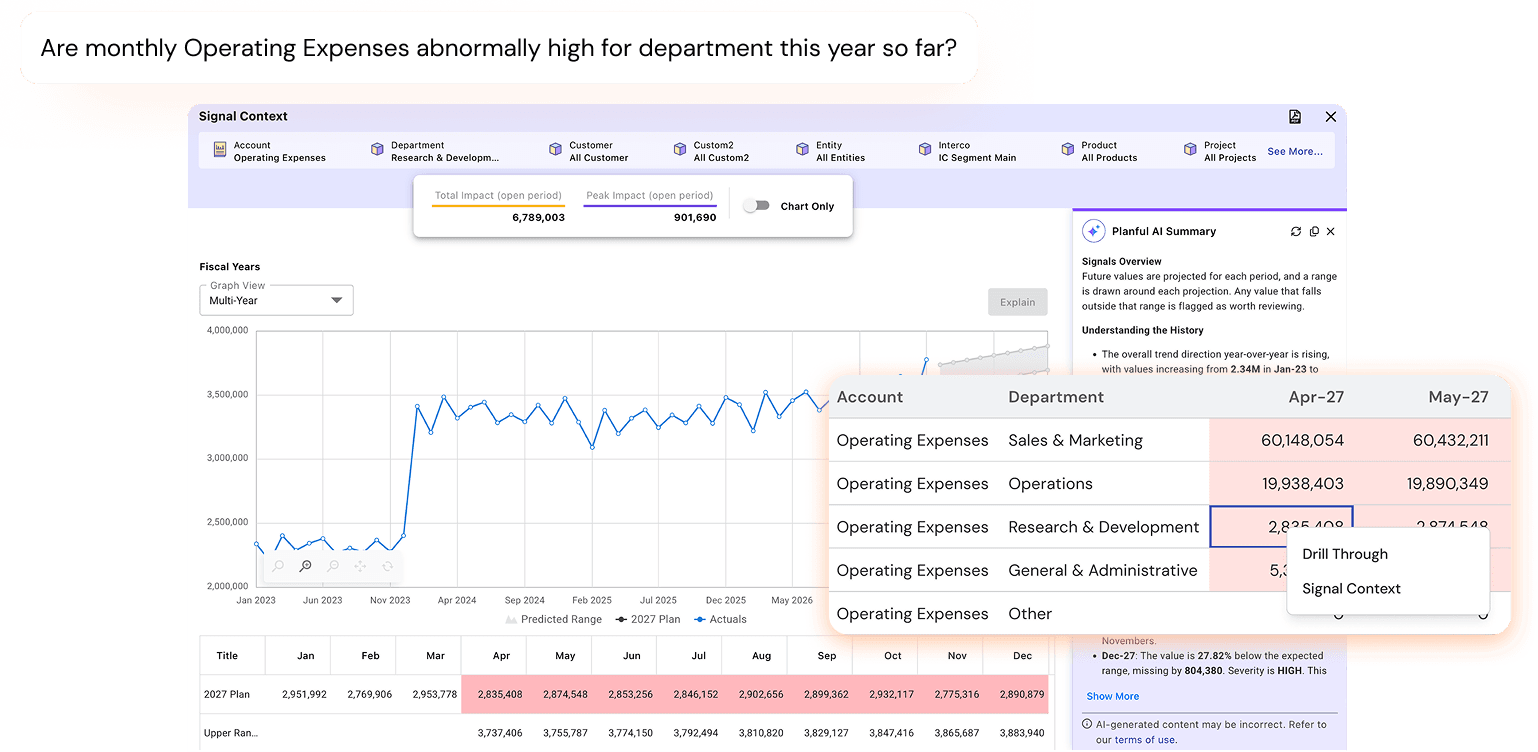
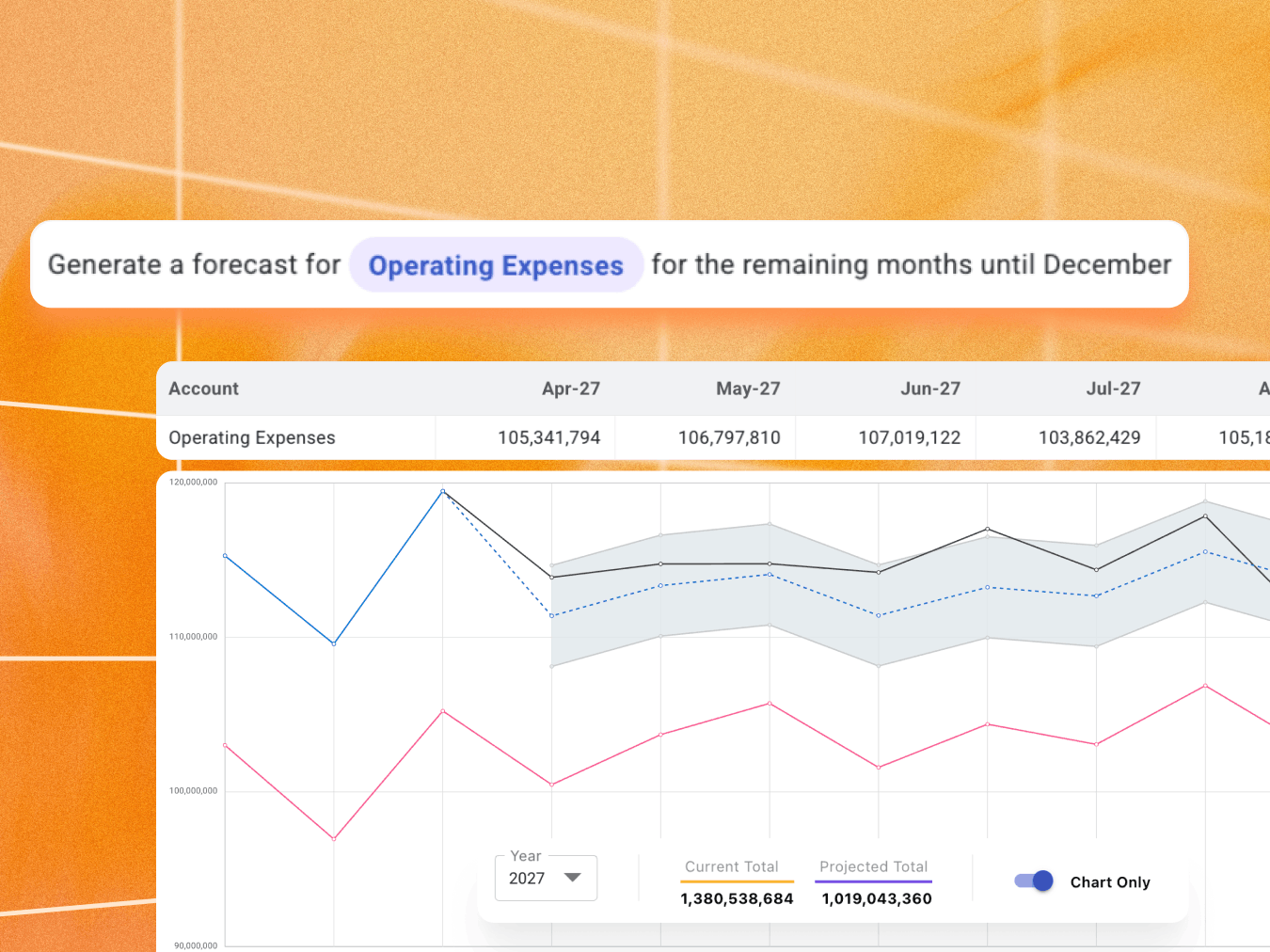
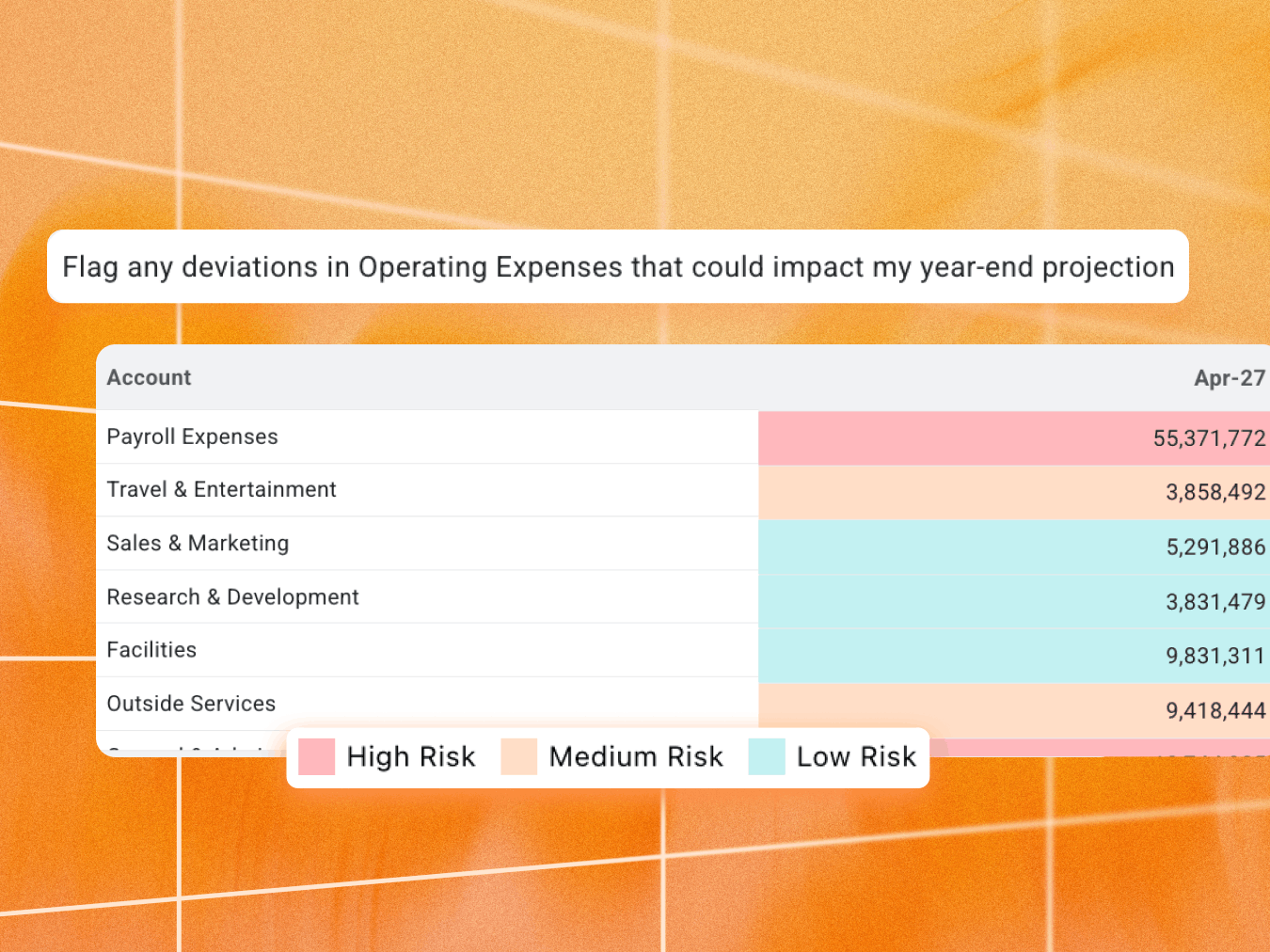
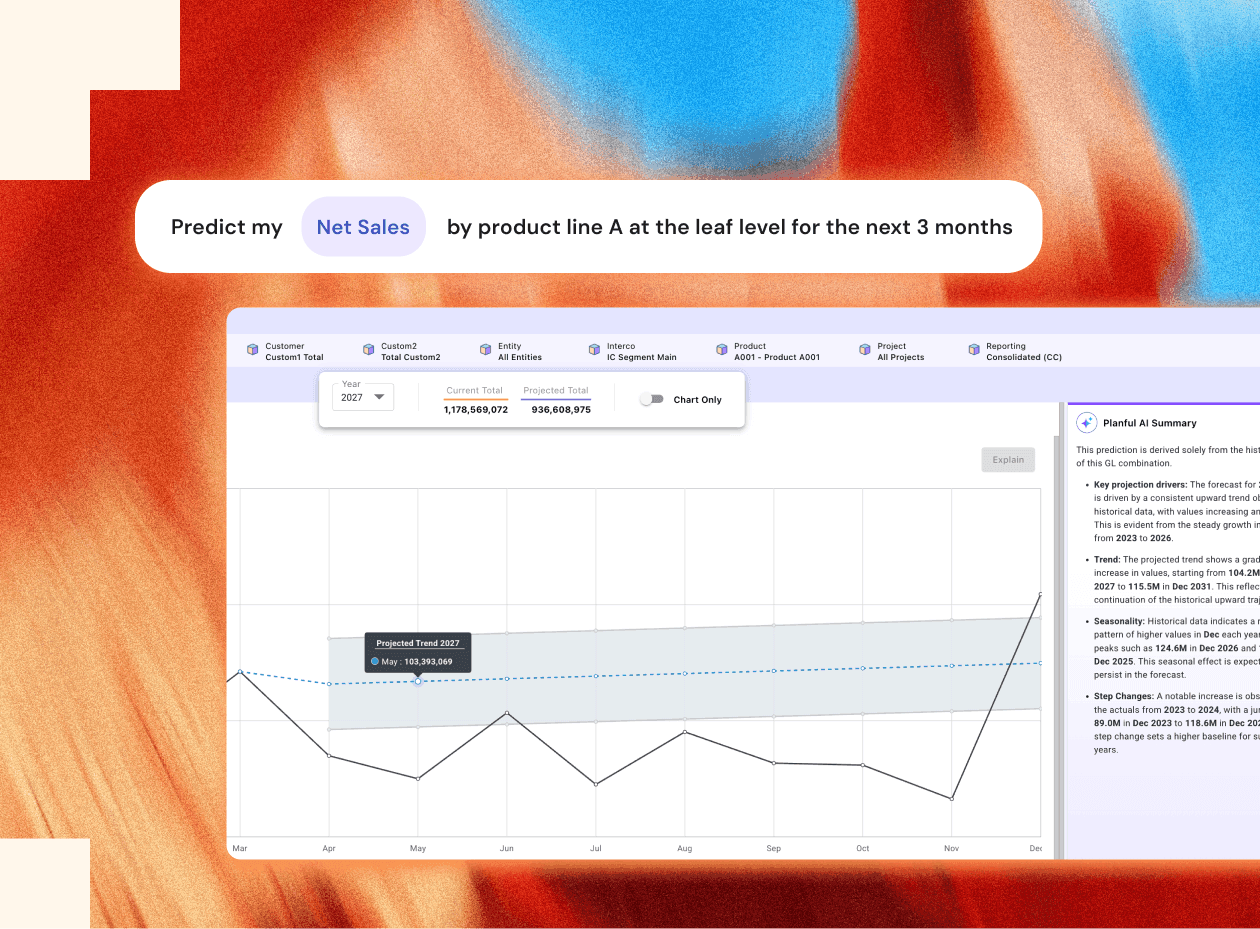
Planner combines AI powered forecasting (projections) with continuous monitoring (signals) across P&L and GL data in Planful. Track future performance and catch issues before they impact results.
Ask planning and forecasting questions, update assumptions, and refine plans in natural language, Move faster through cycles, and keep pace as conditions change.
Every projection and signal is grounded in your data, using trends, seasonality, and key drivers to produce consistent, reliable outputs you can trust.
Planner inherits Planful’s security and governance controls. User permissions are respected, and your data is never used to train external models.
Planner connects projections and context across the planning cycle, so your team can move from forecasts to decisions without resetting each cycle.
Begin each cycle with a ready starting point grounded in actual performance, not last year’s data. Free up time to focus on refining and adjusting instead of rebuilding.
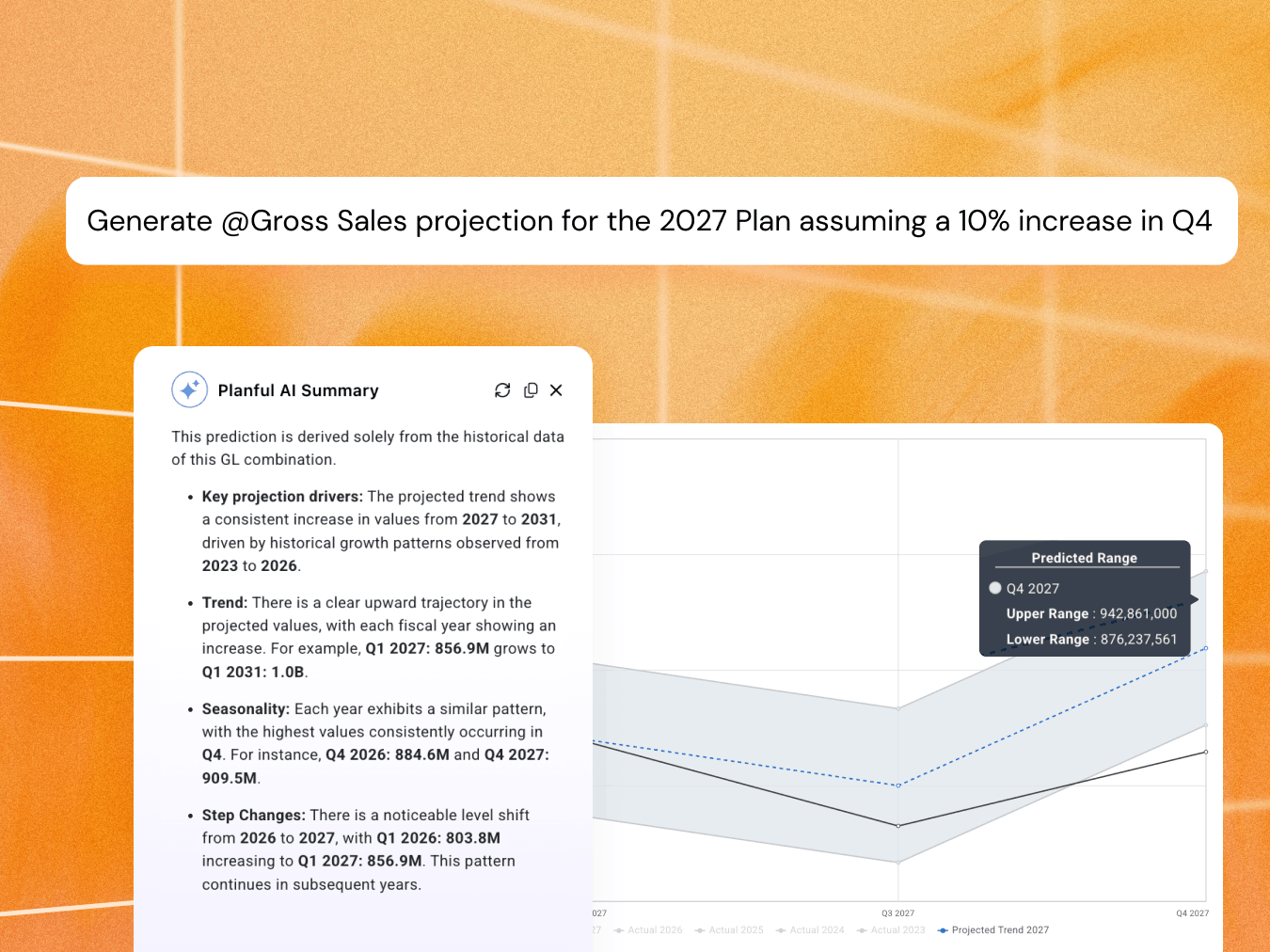
When leadership asks what if, Planner helps you answer it. Generate scenario-level plans with clear reasoning, compare options and move forward with a plan.
As assumptions evolve, update projections without rebuilding. With AI in financial planning, your team maintains a consistent view of future performance as inputs change.
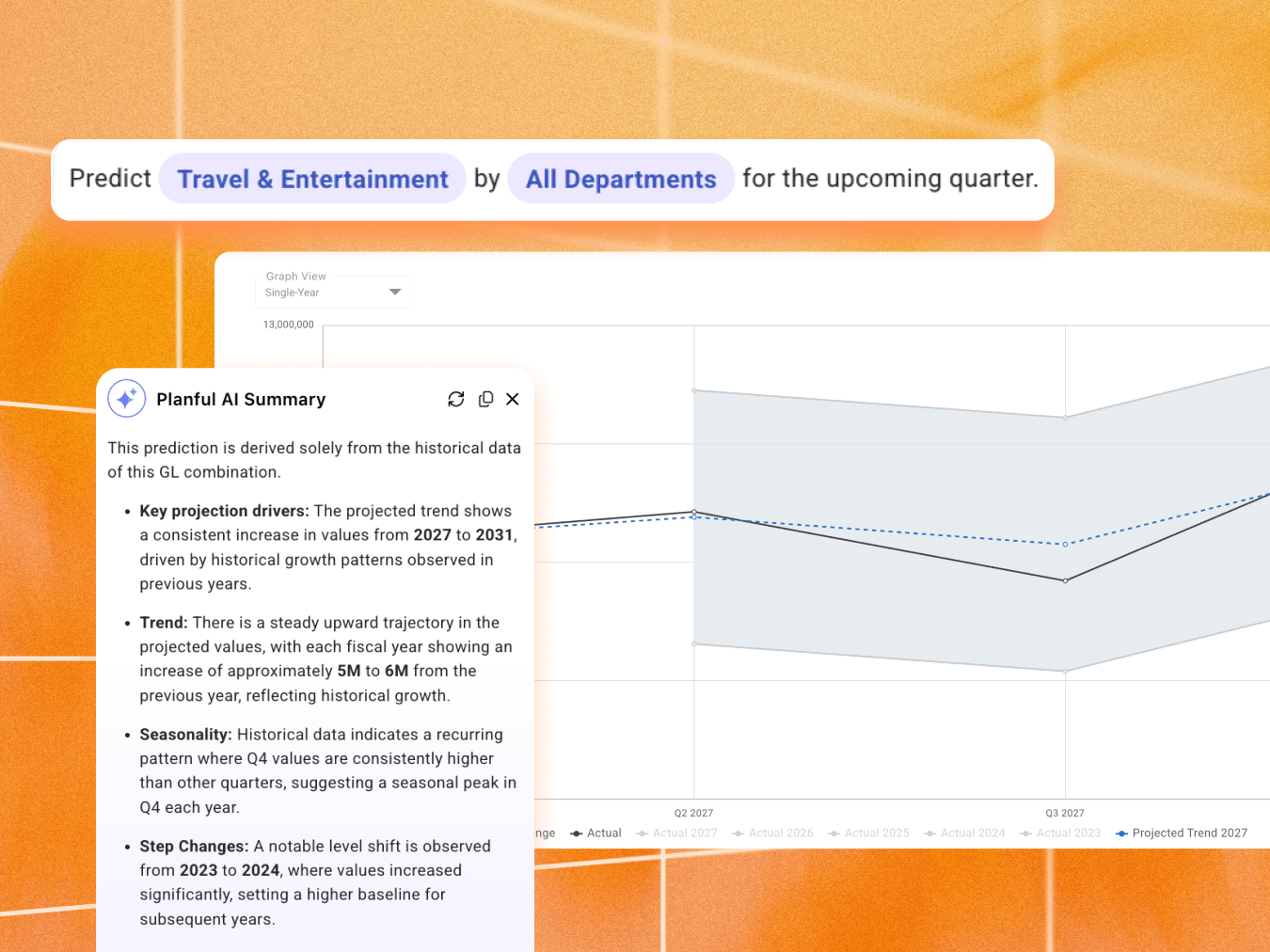
Planner summarizes the drivers, trends, seasonality, and step changes behind each projection and signal. If your CFO asks, “Why this number?”, your team already has a clear answer.

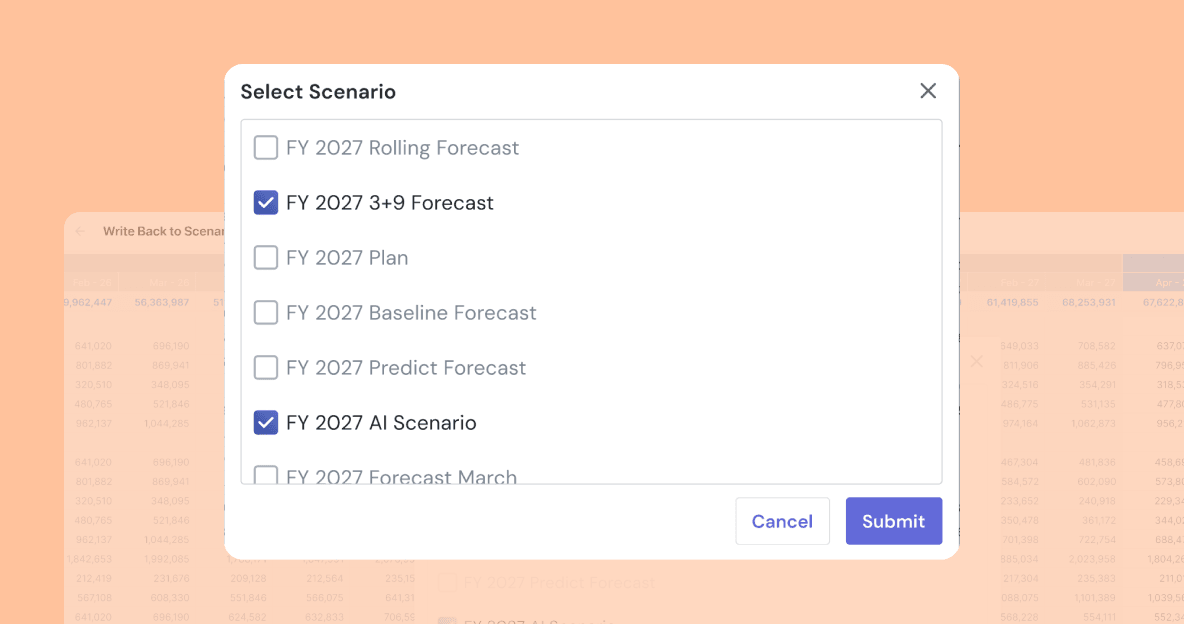
Planner will write projections and scenario outputs directly back into your Planful planning structure, so the numbers your team generates in conversation become the numbers in the plan. No manual re-entry and no version confusion.

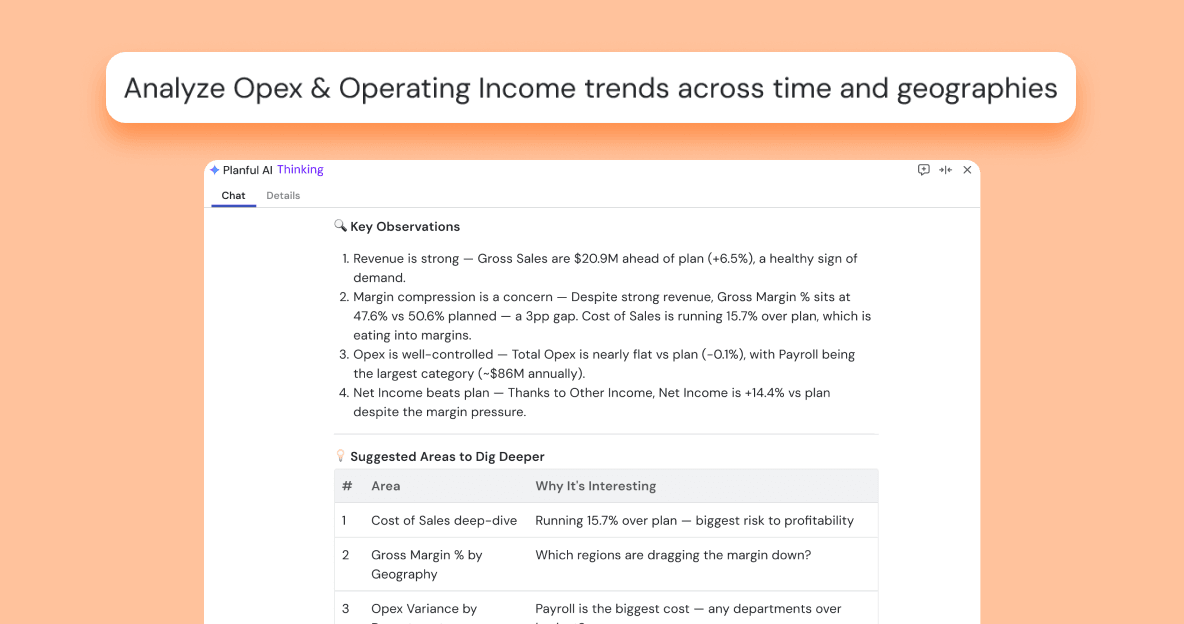
Planner will surface deeper context behind projections, identifying root drivers, quantifying impact, and recommending specific adjustments, so your team can resolve forecast issues and move forward faster.
Planner combines OpenAI’s foundation with Planful’s patented calculation engine, so every output stays governed, explainable, and contained within your environment. Your data is never used to train external models. End-to-end encryption, dimension-level access controls, and global certifications, including the EU AI Act, ensure your team can deploy AI with confidence.


Get quick answers to common questions about AI financial planning, including methods, tools, and how AI is transforming the way teams generate insights.
AI financial planning uses machine learning and natural language interfaces to generate forecasts, identify trends, and explain financial outcomes. Instead of manually building models, teams can use AI to analyze historical data, surface insights, and produce projections that continuously update as inputs change.
AI in financial planning improves accuracy by analyzing large volumes of historical and real-time data, identifying patterns such as seasonality and anomalies, and automatically adjusting projections. This reduces reliance on static spreadsheets and helps finance teams produce more reliable, data-driven forecasts.
AI-generated financial plans can be trusted when they are built on your data and provide full transparency into how results are produced. Planful AI includes the drivers, trends, and logic behind each projection, giving teams clear visibility into how numbers are calculated and confidence in using them for decision-making.
Planful AI uses your historical and real-time financial data to generate projections based on trends, seasonality, and key drivers. At the same time, it continuously monitors your data to detect anomalies and changes that could impact performance. This combination gives teams a complete view of what’s ahead and what requires attention.
Planful AI is purpose-built for financial planning and works directly on structured financial data within your environment. Unlike general AI tools, it combines forecasting, anomaly detection, and explainable insights in one workflow, helping finance teams plan, analyze, and act without switching between systems.