What-if scenario modeling

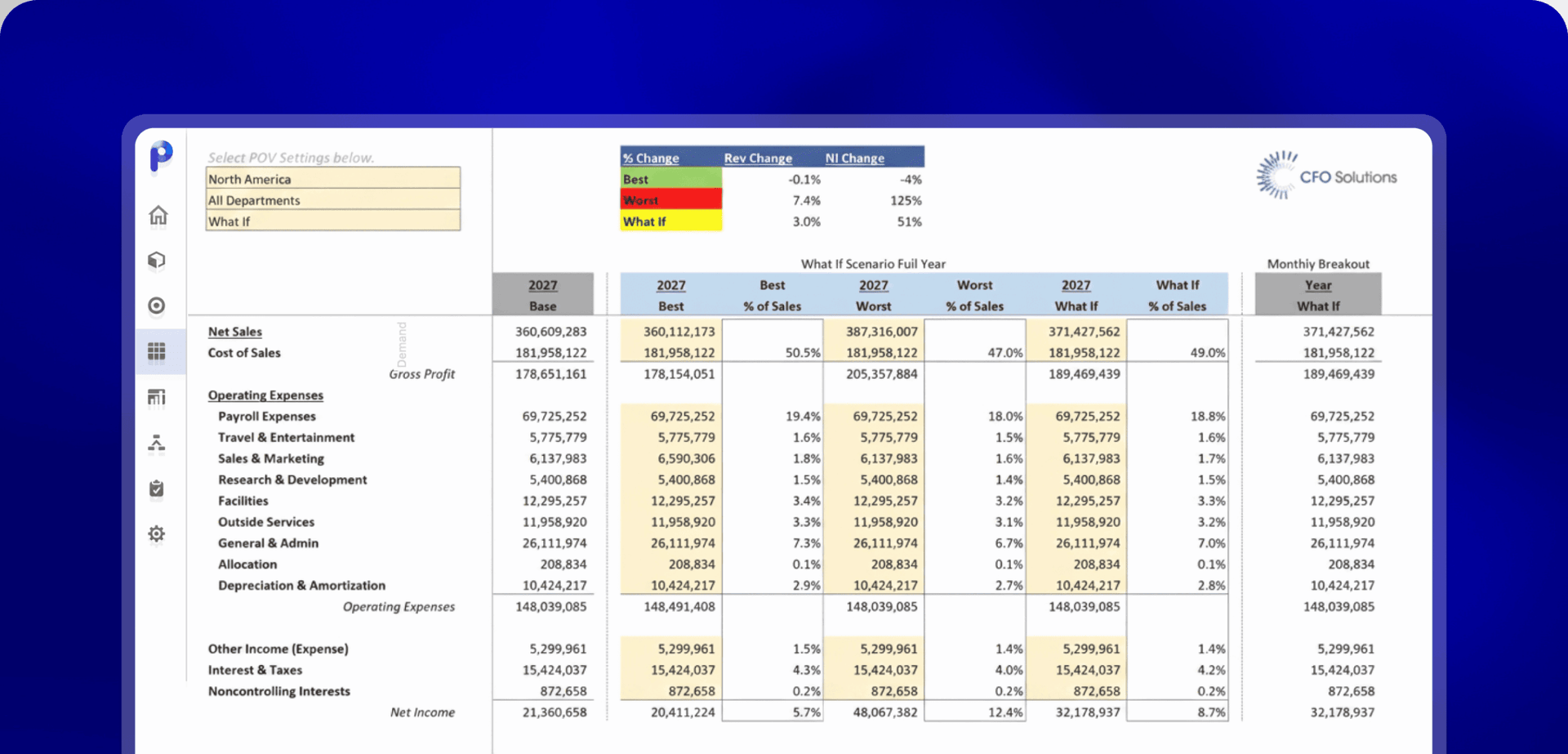
Finance teams field scenario requests regularly, often with little lead time to rework the underlying model. Planful supports high-level assumption changes that cascade through automatically, at any level in the hierarchy, so finance can test scenarios without touching every underlying driver.

What you can do with Planful

Adjust assumptions at any level of the hierarchy

Adjust assumptions at any level of the hierarchy

Make changes at the summary level and have Planful allocate the impact down to the detail automatically. No manual cascade required.

Incorporate changes at roll-up levels

Incorporate changes at roll-up levels

Adjust macro views and have Planful's breakback allocation distribute values down to the lower levels automatically.

Compare scenarios side by side

Compare scenarios side by side

Run multiple what-if versions against the original scenario and compare outcomes without leaving the model or duplicating files.

Apply a scenario to the plan when it's selected

Apply a scenario to the plan when it's selected

When leadership picks a direction, apply the scenario as a mass update across the plan. No manual rebuild from the new assumptions.

Why teams love it

Scenarios ready when leadership asks

Leadership asks for a downside case or a reforecast and finance has to build it from scratch, usually in a duplicate spreadsheet, usually under deadline. Planful lets teams build and compare what-if versions against the base plan before the ask comes.

Top-line changes that cascade automatically

Making a high-level assumption change in a spreadsheet means manually updating every line it touches. Planful’s breakback allocation distributes the change from the summary level down to the detail automatically. Finance makes the adjustment once and the model reflects it everywhere.

Options on the table before the conversation starts

When leadership asks for a reforecast or a downside case, finance usually builds it after the ask. Planful lets teams run multiple scenarios against the same plan and compare outcomes side by side so the analysis is ready for when the conversation happens.

Author thumb
Author thumb
Author thumb

Related resources