 Back to Blogs
How to Build the Ultimate Marketing Campaign Template

To help you think through your marketing campaign in its entirety, you can use our comprehensive marketing campaign template. Marketing teams can enhance campaign strategy, execution, and overall marketing campaign management with this handy template.
What is a marketing campaign?
A marketing campaign is defined as an organized plan to promote a specific message and reach a goal. Using marketing campaign templates can help manage and execute campaigns more efficiently and effectively.
What’s included in a best-in-class marketing campaign template?
It should provide a framework and launch plan for marketing campaigns. Below, we list the fields included in a marketing campaign plan template and how to fill out each field. The template includes 17 fields in total.
- Goals – list the goals of the marketing campaign. One campaign could have several goals.
- Audience – determine the audience you want to reach.
- Topline Message – a sentence on the overall message, providing the top-level purpose of a campaign.
- Supporting Messages – several supporting messages of the campaign.
- Marketing Strategy – a short outline of the strategy of the campaign.
- Call-To-Actions (CTAs) – what are the next steps for your target audience to take? List all of the call-to-actions of the campaign.
- Metrics of Success – which key performance indicators are tracked? Be specific in the goals set by adding a value or number.
- Campaign Duration – how long will your marketing campaign last? This template includes specific start and end dates of the campaign.
- Content – outline the content to be created in order to carry out the message of your marketing campaign.
- Marketing Channels – which channels will you use to reach your target audience and promote your message?
- Customer Marketing Activity – how to reach your existing customers
- PR/AR Activity – determine your PR strategy. How press releases should be used to support your marketing campaign.
- Nurturing Activity – how an email nurturing plan supports your campaign.
- Internal Communications – how to present the marketing campaign updates to the internal team.
- Timeline – specific dates to carry out actions within the marketing campaign.
- Marketing Campaign Budget – includes the financial budgeting for the marketing campaign.
- Expected Marketing ROI – what is the amount of revenue you expect to drive, and how does this measure up to your budget?
When building a marketing campaign template, not all of these fields need to be filled out for every campaign, but if you are running large-scale integrated campaigns, this framework should help you pull in all the details.
A marketing campaign template to get you started
Ready to get started? Below is our comprehensive template that can be used for your next marketing campaign strategy. Be sure to be descriptive and detailed when filling out the fields listed on the template:
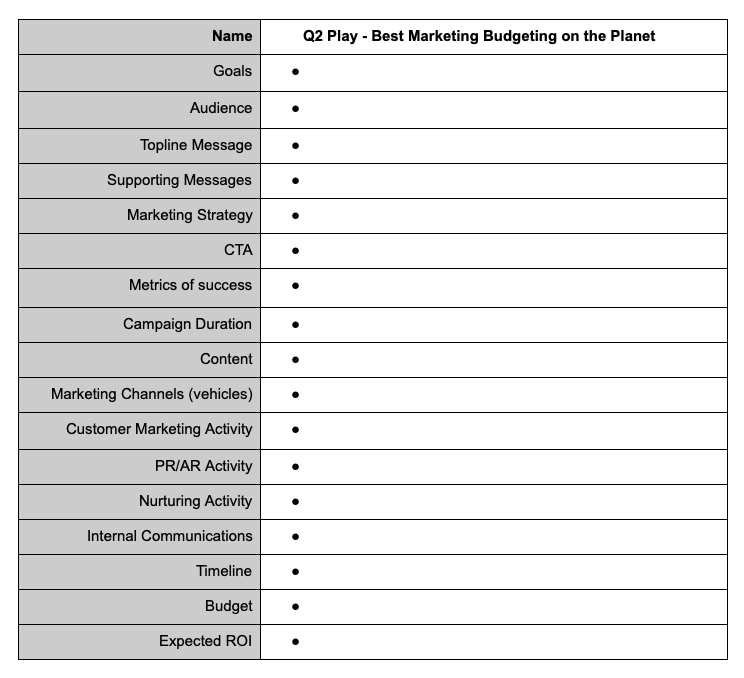
Marketing campaign template example:
Want to see our ultimate marketing campaign template used in action? Below is an example of the marketing campaign template filled out with a Planful campaign for a product launch. Notice the level of detail that is filled out for each field.
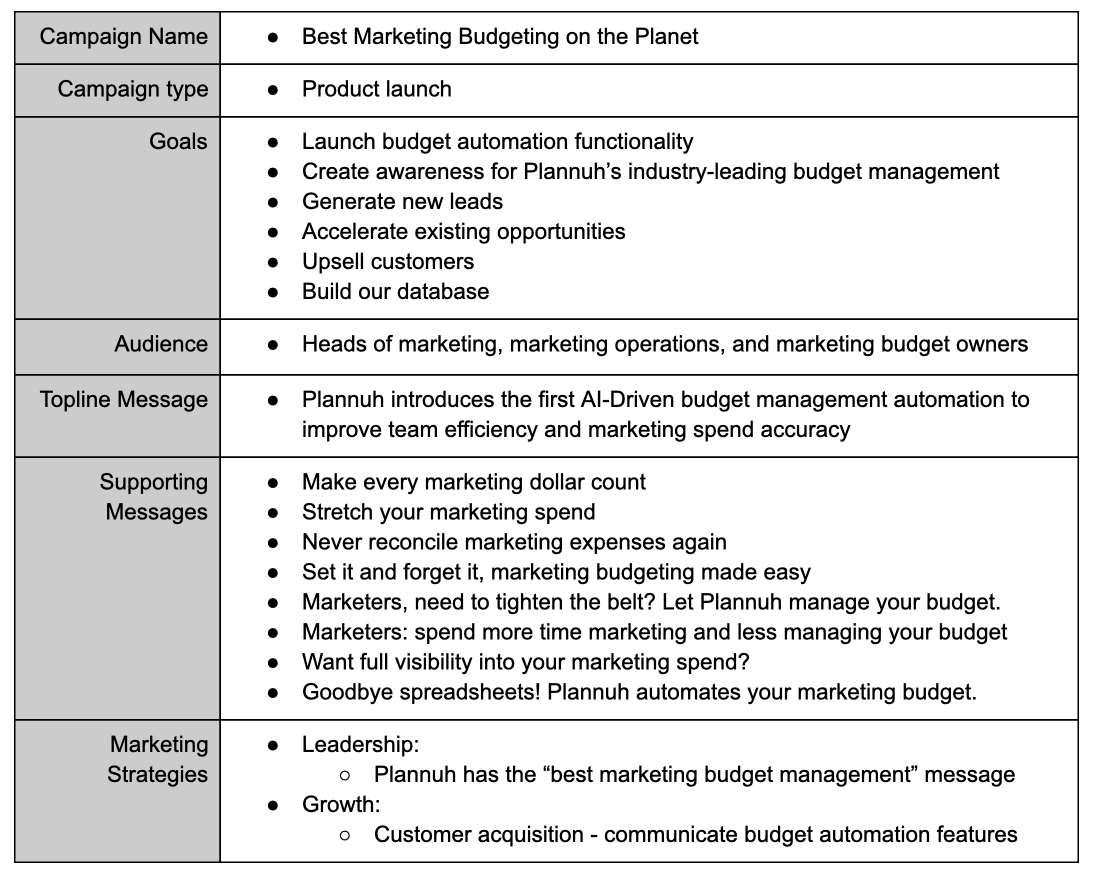

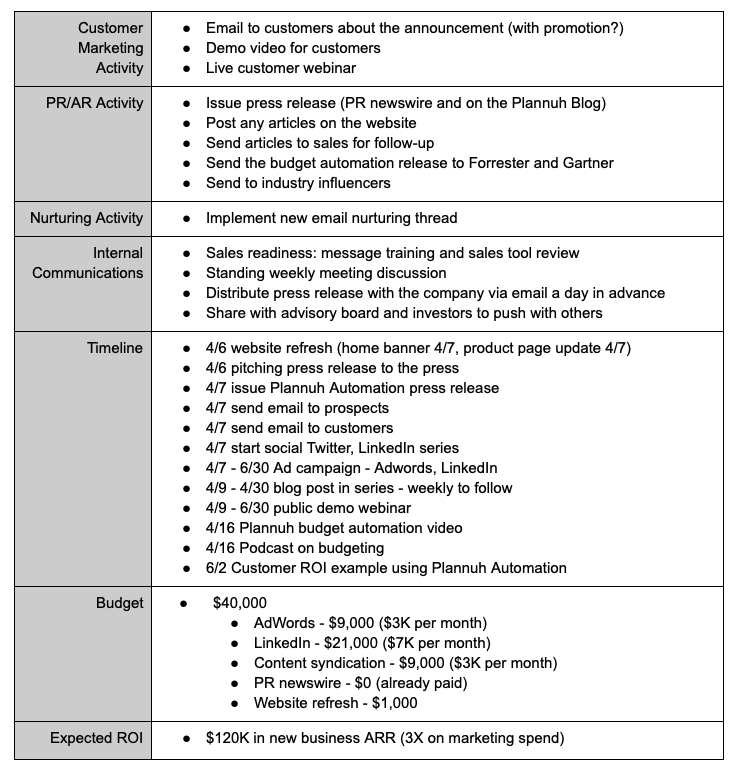
As you can see in the example above, the marketing campaign template includes the level of detail needed for each field to help carry out your campaign. It includes top-level items such as goals and campaign messaging. It also covers all marketing channels, including email, public relations, social media advertising, and content marketing.
Why you should use a marketing campaign template
By using Planful’s marketing campaign template, your marketing team will have everything you need to move forward to create successful campaigns. This includes everything from the campaign timeline to marketing and PR activities, marketing strategies and goals, and more.
With all of the details of a marketing campaign in one place, everyone involved in managing and executing the campaign can refer to the filled-out template and get the details of the plan and strategy.
Before you go, remember these 3 things…
- A marketing campaign template saves time and stress by aligning teams around a single plan, message, and timeline.
- Clear campaign goals power accurate ROI forecasting. Give your team metrics that measure impact, not just activity.
- The right template turns strategy into execution. Use it to connect messaging, channels, and budget into one seamless plan.
Build smarter campaigns with the right marketing strategy.
Explore our interactive demo to see how Planful can help you organize campaigns, align stakeholders, and make the most of your budget.
FAQs
What should a marketing campaign template include?
A strong marketing campaign template includes goals, audience, messaging, channels, timeline, and budget. It should also define KPIs, CTAs, and success metrics, giving everyone a clear path from planning to execution.
How should I use marketing campaign templates effectively?
Start by aligning on campaign goals and target audience, then fill in messaging, content, and channel plans. Revisit and refine the template as the campaign progresses to stay on strategy and budget.
How does Planful help teams manage complex marketing campaigns?
Planful brings clarity and control to campaign planning by centralizing timelines, budgets, messaging, and performance metrics in one place. Marketing teams use Planful to collaborate with stakeholders, track spend in real time, and align execution with strategic goals—no spreadsheet juggling required. It’s especially helpful when campaigns span multiple channels, departments, or regions.

 Shore Capital exclusive event - Oct 15 @ [X:XX] AM ET: What Every Finance Leader Should Know About PE Reporting

